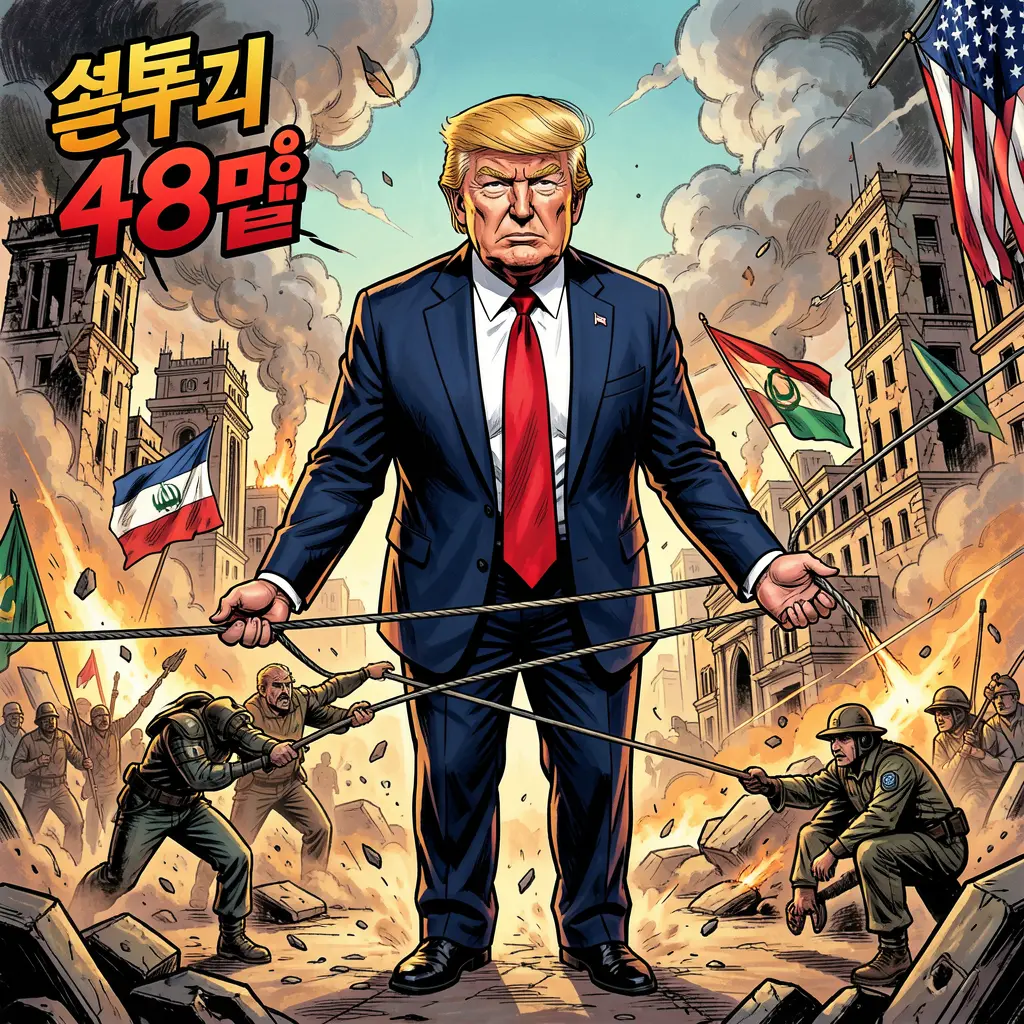
The Race Against the Clock: A High-Stakes Diplomatic Gamble
U.S. President Donald Trump has signaled that a second round of peace negotiations between the United States and Iran could materialize within the next 48 hours. These potential talks, likely to be hosted in Islamabad, Pakistan, come at a critical juncture as both nations struggle to bridge deep-seated ideological and strategic divides.
This urgency is driven by the looming expiration of a two-week ceasefire scheduled for April 22. If a diplomatic breakthrough is not achieved before this deadline, the risk of a return to full-scale hostilities increases significantly, potentially destabilizing the entire Middle East region.
The Role of Pakistan and the Mediator
In a recent phone interview, President Trump highlighted the pivotal role of Pakistan in facilitating these discussions. He specifically praised Field Marshal Asim Munir, describing his efforts as "doing a great job" in mediating the conflict.
"You should stay there, really, because something could be happening over the next two days, and we're more inclined to go there," Trump stated regarding the possibility of meeting in Islamabad.
Pakistan has historically served as a neutral ground for complex geopolitical negotiations due to its strategic location and diplomatic ties. The involvement of a high-ranking military official like Field Marshal Munir suggests that the mediation is not merely political but involves security guarantees that both Washington and Tehran find acceptable.
The Nuclear Deadlock: 20 Years vs. 5 Years
At the heart of the conflict is the issue of uranium enrichment (the process of increasing the concentration of uranium-235 to create fuel for nuclear reactors or material for nuclear weapons). The U.S. maintains a hardline stance that Iran must never possess nuclear weapons.
The Divergent Proposals
- The U.S. Position: Washington reportedly proposed a 20-year suspension of all nuclear activities to ensure long-term stability and non-proliferation.
- The Iranian Position: Tehran countered with a much shorter window, offering to suspend activities for only up to five years.
President Trump expressed dissatisfaction with reports regarding the 20-year timeframe, reiterating his absolute stance that Iran cannot have nuclear weapons. This gap in timing reflects a fundamental lack of trust; the U.S. seeks a generational guarantee, while Iran seeks a shorter commitment that allows it to regain its nuclear sovereignty sooner.
Economic Warfare and Strategic Chokepoints
Beyond nuclear capabilities, the negotiations are bogged down by severe economic and territorial disputes. Iran is demanding the release of frozen assets (money held in foreign banks that the government cannot access due to sanctions) and the lifting of both primary and secondary sanctions.
The Strait of Hormuz Crisis
One of the most volatile elements of this conflict is the Strait of Hormuz, a narrow waterway that serves as the world's most important oil transit chokepoint. Iran claims the right to control this route, which is vital for the global supply of oil and gas.
In response to the failure of the first round of talks, President Trump has already implemented a naval blockade of Iranian ports. This move is designed to exert maximum pressure on the Islamic Republic by cutting off its maritime trade and restricting its ability to export resources.
The Oil Sanction Hammer
Adding to the pressure is the U.S. Treasury Department's decision regarding sanction waivers (temporary legal permissions that allow certain countries to trade despite existing sanctions).
- Oil Waiver Expiration: A 30-day waiver on Iranian oil at sea is set to expire on April 19.
- Global Context: The U.S. has similarly declined to renew waivers for Russian oil, signaling a broader strategy of using economic isolation to force geopolitical concessions.
These waivers were originally granted to prevent global oil price spikes caused by the U.S.-Israeli war against Iran. By allowing these waivers to expire, the U.S. is effectively telling Tehran that the economic cost of refusing to negotiate will be unsustainable.
Future Outlook: Peace or Escalation?
As the world watches the next 48 hours, the outcome depends on whether the "carrot" of sanctions relief and the "stick" of naval blockades can force a compromise. If the talks in Pakistan fail, the expiration of the ceasefire on April 22 could lead to a significant escalation in military activity.
Analysts suggest that the U.S. is utilizing a maximum pressure campaign (a strategy of using all available diplomatic, economic, and military tools to force an opponent to change their behavior). Whether this strategy leads to a sustainable peace treaty or a renewed conflict remains the central question of current international diplomacy.