The 'Bulldog' General's Urgent Mission
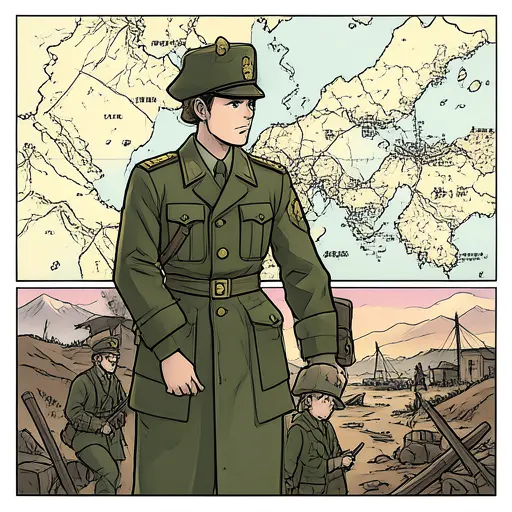
In September 1950, General Walton Walker, commander of the US 8th Army, was moving with extreme urgency. Known as the 'Bulldog' due to his appearance and fiery personality, Walker was a field commander who frequently visited the front lines to issue intense orders.
To survive the dangers of the battlefield, Walker's jeep was reinforced with two steel plates on the floor to protect against landmines (explosive devices triggered by pressure). This allowed him to navigate the hazardous front lines personally.
The Grand Strategy: The Incheon Landing
General Douglas MacArthur, the UN Commander-in-Chief in Tokyo, was designing a massive operation to flip the tide of the war. His primary target was Incheon, though he considered Gunsan in North Jeolla Province as a backup option.
The success of this operation depended entirely on how far the ground forces tied down at the Nakdong River line could push northward.
This strategic movement was essential to ensure that the troops landing by sea would not be isolated but could be supported by the army advancing from the south.
The Critical 'Link-up' Operation
According to the memoirs of General Paik Sun-yup, the most pressing concern at the time was the 'Link-up' operation.
- What is a Link-up?: It is a military maneuver where two separate friendly forces (in this case, the sea-landing force and the ground-advancing force) meet at a designated point to merge their strength.
- Real-world Example: Imagine two teams starting from opposite ends of a city and meeting at a central square to combine their resources for a final goal.
Amidst torrential rain and blinding fog, Commander Kim Jeom-gon played a pivotal role in carving a path through the enemy lines to make this connection possible, securing a turning point in the conflict.