Trump cites a new $8.4 billion oil project
U.S. President Donald Trump said on October 2 that the United States and South Korea were reaching an increasingly favorable deal, pointing to an $8.4 billion project to increase oil production. He made the claim in a post on his social media platform, Truth Social, but did not explain what the project would involve or identify the companies and agencies expected to take part.
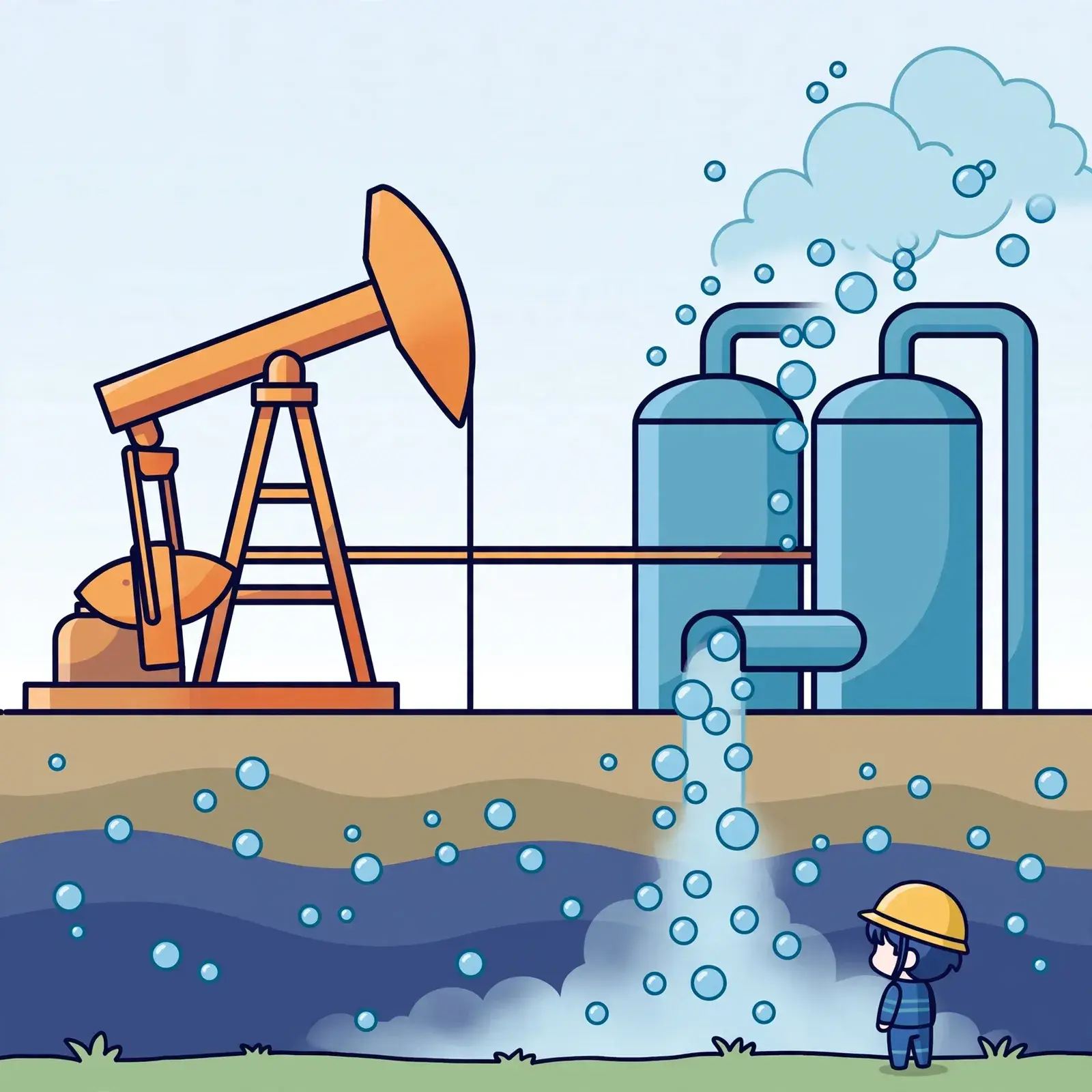
Trump described the proposal as an enhanced oil recovery project, a method of extracting more oil from a field that is already producing. He also said that increasing U.S. oil and gas output would strengthen American energy leadership and support global energy security.
Trump presented the project as part of a deal with South Korea, but his post did not provide enough information to establish what has been agreed or who would pay for it.
What enhanced oil recovery means
Oil does not always flow easily from an underground reservoir. Even after conventional drilling begins, some crude can remain trapped in the rock. Enhanced oil recovery, often shortened to EOR, refers to techniques used to push or draw more of that oil toward production wells.
One approach is to inject carbon dioxide (a gas that can help move oil through underground rock) into a reservoir. Other methods can use steam or water, depending on the geology and the project’s design. A simple comparison is squeezing a nearly empty bottle: the first pour is easy, but getting the last contents out takes an extra step.
- EOR is a production technique, not a single standardized project. Its cost and results depend on the oil field, equipment and operating plan.
- Injected carbon dioxide may remain underground in some projects, but that does not automatically make every EOR project climate-friendly. The full climate impact depends on how the gas is sourced, how much is stored and how much additional oil is ultimately burned.
- A project’s announced price does not, by itself, reveal who is investing, who owns the facilities or how any profits and risks would be shared.
The article did not specify which oil field the proposed project would use, whether carbon dioxide would be injected, or whether South Korean firms would build, finance or operate any part of it. Those details matter because they determine whether the figure describes a signed investment, a preliminary plan or simply a project Trump says is under discussion.
The claim follows a much larger investment announcement
The day before, Trump said South Korea would invest as much as $200 billion in U.S. energy infrastructure, an amount he put at roughly 280 trillion won. He mentioned an Alaska liquefied natural gas project and the construction of eight large nuclear power plants as examples of the planned investment.
Liquefied natural gas (LNG) is natural gas cooled until it becomes a liquid, making it easier to transport by ship. The Alaska project has been under consideration, but the Korean government had not treated it as a finalized investment, according to the article. The article also noted that the scale and specific projects Trump described were not included in the fact sheet—the summary of agreed points released by the two governments.
That difference is important. A political announcement can describe an ambition or a negotiating position, while a binding investment decision usually requires additional steps: a defined project, financial and commercial review, approvals, and agreements setting out each party’s responsibilities. The article said the Alaska proposal remained subject to review and reported that South Korean officials had emphasized commercial viability and domestic legal procedures as conditions for participation.
The $200 billion figure and the newly cited $8.4 billion project should not be treated as confirmed commitments unless the governments provide terms showing what has been approved and by whom.
Is the $8.4 billion project an additional commitment?
Trump’s wording suggested that the oil project was part of a deal with South Korea that was continuing to improve. It could therefore be read as a new project added to earlier investment plans. But his post did not explicitly say that South Korea had approved an additional $8.4 billion investment, and it did not clarify whether the figure represented the total cost of a project, a proposed investment or another financial measure.
The distinction is more than a matter of wording. If a project is newly added, it could change the overall scale and composition of South Korean investment in the United States. If it is an existing proposal or a U.S.-led project that Korean businesses might join, it would mean something different. Without information about financing, ownership, timing and participants, the headline figure alone cannot answer those questions.
The public information described in the article also leaves open whether the project has passed a feasibility review (an assessment of whether a proposal can work financially and technically). A project can be discussed by political leaders long before companies decide it makes commercial sense. For example, a proposed factory may be praised in a public announcement, while investors are still checking construction costs, expected demand and the permits required to operate it.
Why energy projects can become trade and diplomacy issues
Large energy projects often sit at the intersection of business and foreign policy. Governments may use investment discussions to pursue several goals at once: attracting jobs and construction spending, securing supplies of fuel, strengthening relationships with allies or gaining access to technology and markets.
For South Korea, overseas energy investments can be relevant to supply security because the country imports much of the fuel it uses. For the United States, foreign investment can help finance infrastructure and support domestic production. But those potential benefits depend on the details of each project; a headline investment figure does not show how many jobs will be created, how much energy will be produced or whether the expected returns justify the cost.
Nuclear power and LNG also involve long timelines and extensive review. A nuclear plant typically requires detailed safety, construction and regulatory processes. An LNG export project must consider gas supply, pipelines, terminals, shipping and long-term buyers. These requirements make it especially important to distinguish between a proposal, a government-level understanding and a completed contract.
What to watch next
The central question is whether Washington and Seoul will publish details that confirm the project’s status. Useful information would include the proposed oil field, the companies involved, each country’s financial role, the project schedule and whether the $8.4 billion figure is new or already included in another plan.
- Official documents: A joint statement or updated fact sheet could clarify whether both governments recognize the project as an agreed part of their discussions.
- Commercial terms: Details on financing, ownership and expected returns would help show whether companies have made firm commitments or are still evaluating the proposal.
- South Korean conditions: The project’s progress may depend on whether it meets commercial tests and follows South Korea’s legal approval procedures.
- Environmental accounting: If carbon dioxide injection is part of the plan, information about where the gas comes from and how much is stored would help assess its climate impact.
Until such details emerge, Trump’s post is best understood as a presidential claim about a proposed or developing energy project, not conclusive evidence that South Korea has committed $8.4 billion. The announcement may signal that energy investment is prominent in U.S.-South Korean discussions, but the size, structure and status of the oil project remain unclear.