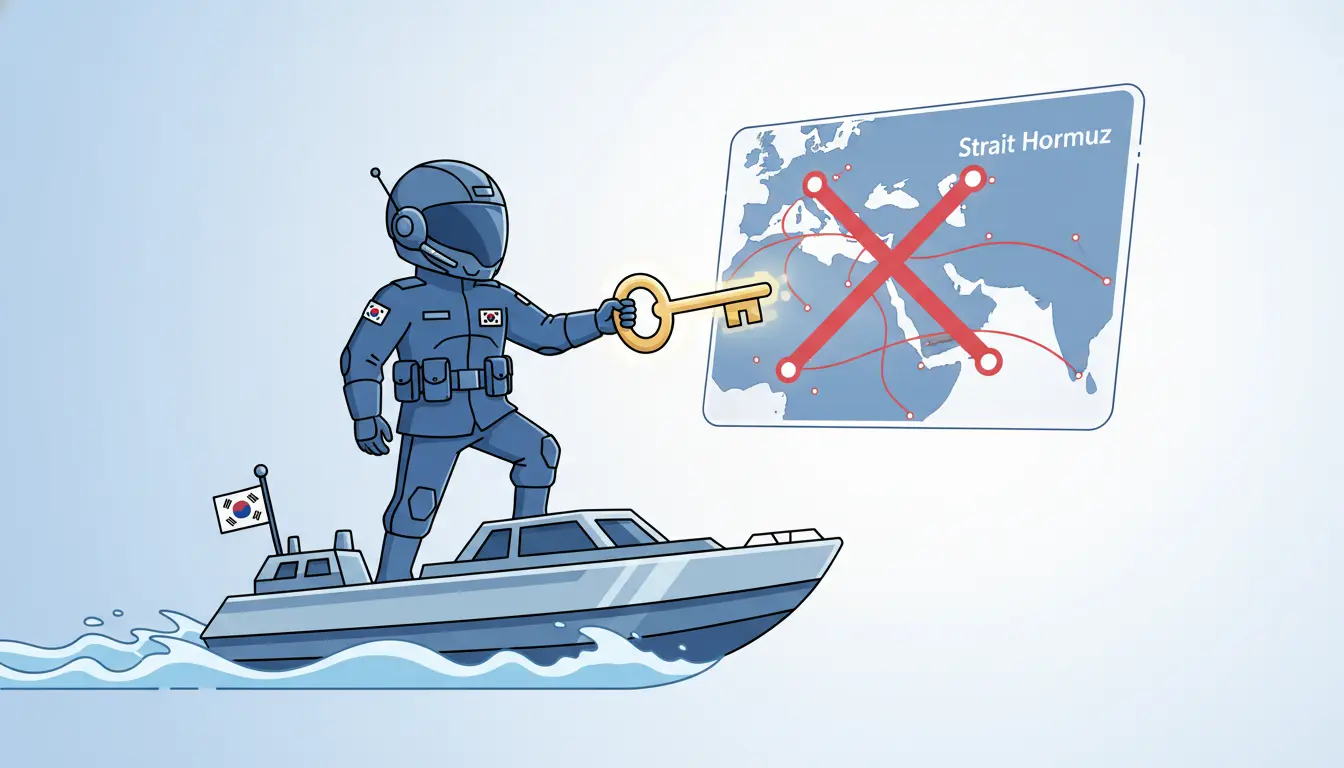
Protecting the World's Vital Maritime Chokepoint
South Korea is stepping up its diplomatic efforts to stabilize the Strait of Hormuz, a critical maritime chokepoint (a narrow passage that can be easily blocked, disrupting global trade). This Wednesday, Seoul will join a multi-nation virtual meeting focused on ensuring the free and safe movement of vessels through this strategic waterway.
Think of the Strait of Hormuz as the 'main artery' of the global energy market. Since a vast portion of the world's oil supply passes through this narrow gap, any disruption there can lead to a sudden spike in fuel prices and cause a ripple effect across the global economy.
Planning for a Safe Post-Conflict Horizon
The upcoming meeting is a follow-up to a UK-led ministerial gathering of over 40 countries. Deputy Foreign Minister Chung Eui-hae will represent South Korea in the talks, which are being organized by Britain and France to coordinate international responses.
"While the ongoing conflict makes rapid progress difficult, the objective is to identify concrete measures to stabilize the strait through both diplomatic and military tracks once the fighting subsides."
The participants are focusing on several key pillars to restore maritime order:
- Safe Release of Personnel: Working together to secure the release of ships and sailors currently stranded or detained in the area.
- Information Coordination: Establishing a system for coherent and timely information sharing between governments and private shipping operators.
- Collective Diplomatic Action: Utilizing international bodies like the United Nations to urge for the unconditional reopening of shipping lanes.
Navigating Complex Geopolitical Waves
The situation remains highly volatile following the failure of peace talks between the United States and Iran. Furthermore, the U.S. Navy's announcement of a potential blockade has added layers of complexity to the regional security landscape.
South Korea has been an active participant in multiple security forums, including France-led military meetings, to protect its national interests. By sharing information regarding its own stranded vessels and crews, Seoul is working to ensure their safe passage during temporary ceasefires.
As a major trading nation, South Korea's involvement reflects its commitment to maintaining the rules-based international order and protecting the vital supply chains that sustain global commerce.