
The Fall of a Controversial Creator
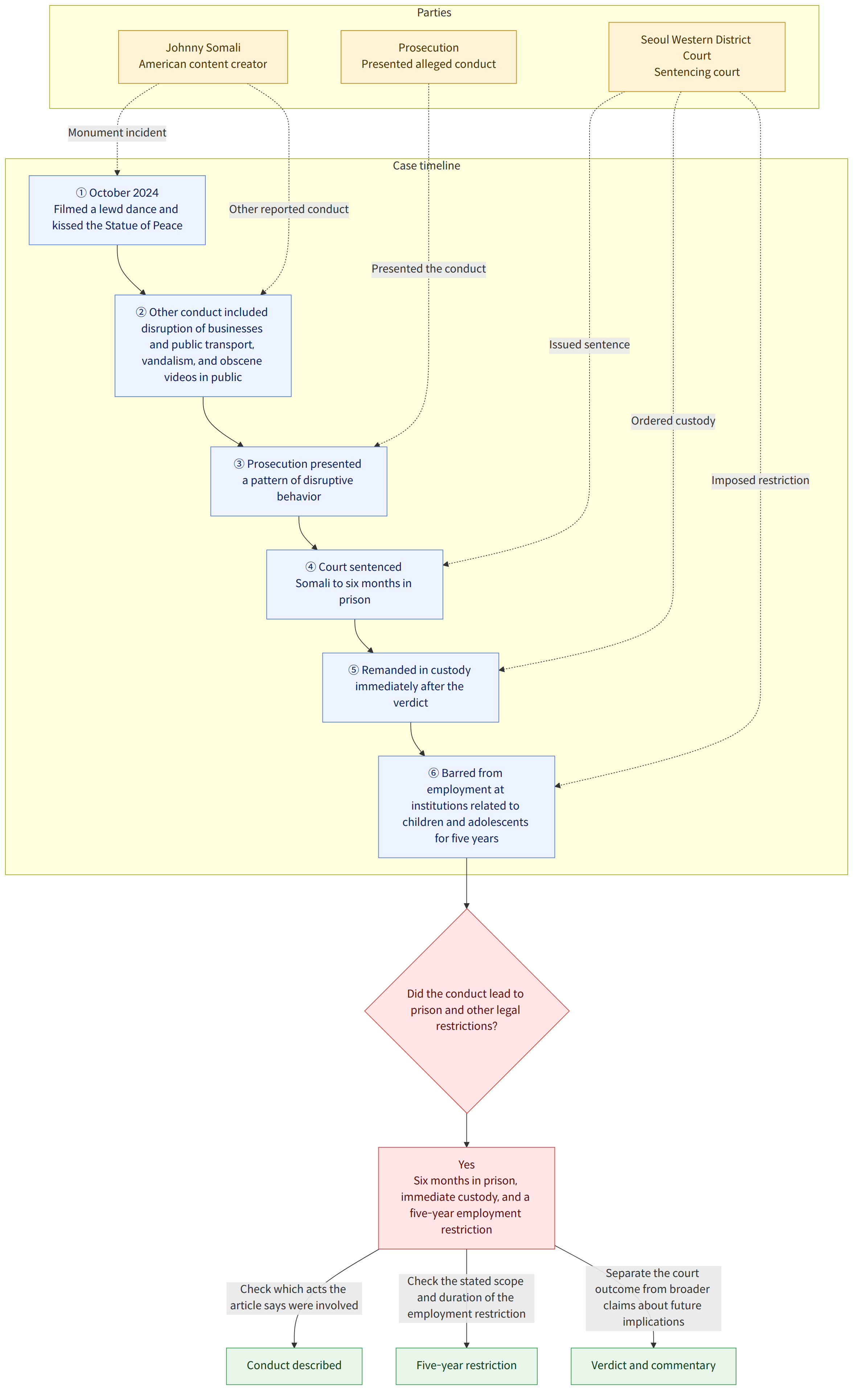
In a landmark ruling that has resonated across social media platforms, the Seoul Western District Court has sentenced American YouTuber Johnny Somali to six months in prison. The decision follows a series of highly controversial and offensive actions that sparked massive public outcry in South Korea.
Johnny Somali, a content creator known for provocative and often disrespectful behavior, was not only sentenced to prison but was also remanded in custody immediately following the verdict. This swift judicial action underscores the seriousness with which South Korean authorities view the intersection of digital content creation and public order.
A Timeline of Provocation and Offense
At the heart of the legal proceedings is an incident from October 2024 that deeply wounded the sensibilities of the Korean public. Somali was accused of filming himself performing a lewd dance and kissing the Statue of Peace (a monument dedicated to the victims of wartime sexual slavery by Imperial Japan).
The Statue of Peace is a profound symbol of historical trauma and resilience for many Koreans, making any act of desecration a direct affront to national dignity.
Beyond the incident at the monument, the prosecution presented a pattern of disruptive behavior that extended far beyond a single video. His list of offenses includes:
- Obstruction of business: Disrupting the operations of local establishments.
- Public order violations: Causing disturbances on public transportation, including buses and subways.
- Vandalism: Damaging a convenience store in the Mapo district of Seoul.
- Indecent exposure: Playing obscene videos in public spaces, including amusement parks.
Legal Consequences and Social Restrictions
In addition to the six-month prison term, the court handed down a significant secondary penalty. Johnny Somali has been barred from employment at institutions related to children and adolescents for five years.
This specific restriction is a preventative measure designed to protect vulnerable populations from individuals with a history of indecent or disruptive behavior. It serves as a legal barrier to ensure that those who use their influence to cause public harm are restricted from environments where they could impact minors.
The Broader Context: Content Creation vs. Social Responsibility
This case highlights a growing tension in the digital age: the boundary between "freedom of expression" and "criminal misconduct." Many influencers seek to gain views through shock value (the practice of using extreme or offensive content to grab attention), often ignoring the legal and ethical frameworks of the countries they visit.
Historically, the rise of "prank culture" has led to numerous legal battles worldwide. However, when these actions target sensitive historical symbols or violate local public decency laws, they transition from mere entertainment to criminal acts.
Future Implications for Global Travelers and Influencers
The sentencing of Johnny Somali sends a clear message to the global community of digital nomads and influencers. It establishes a precedent that digital actions have real-world legal consequences, regardless of the perpetrator's nationality.
Moving forward, we can expect:
- Stricter monitoring of foreign influencers by local law enforcement in major tourist hubs.
- Increased legal scrutiny regarding the use of historical and cultural symbols for social media engagement.
- Heightened awareness among content creators regarding the specific public order laws of the nations they visit.
As the digital landscape continues to evolve, the legal system is increasingly being forced to adapt to the unique challenges posed by the pursuit of viral fame.