Court Recognizes the Death as Work-Related
A South Korean court has ruled that the death of a tugboat crew member who fell into the sea after drinking was a work-related accident. The sailor was returning to his vessel ahead of a scheduled nighttime towing operation when he fell while trying to board.
The Incheon District Court ordered the Korea Towing Vessel Association to pay his family about 133 million won in survivor benefits and funeral expenses. The ruling followed a lawsuit filed by the sailor’s family seeking compensation for his death.
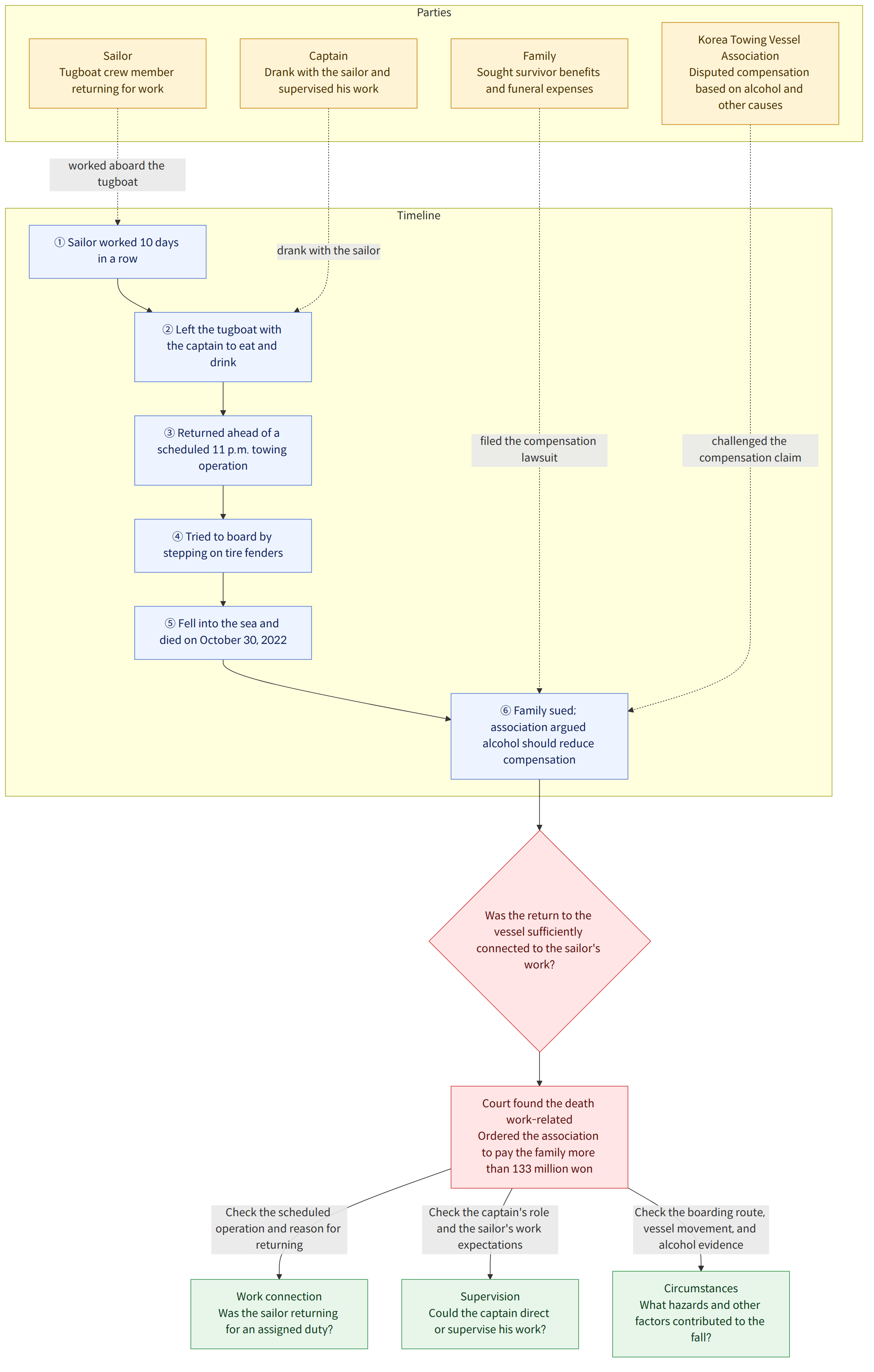
The court’s central finding was that the sailor was returning to the boat to carry out his duties, and that boarding the vessel was part of the work process.
What Happened at the Dock
The sailor died on October 30, 2022, after falling into the water beside a small-vessel pier in Incheon. He had worked 10 days in a row and had left the tugboat with its captain to drink before returning for a towing job scheduled for 11 p.m.
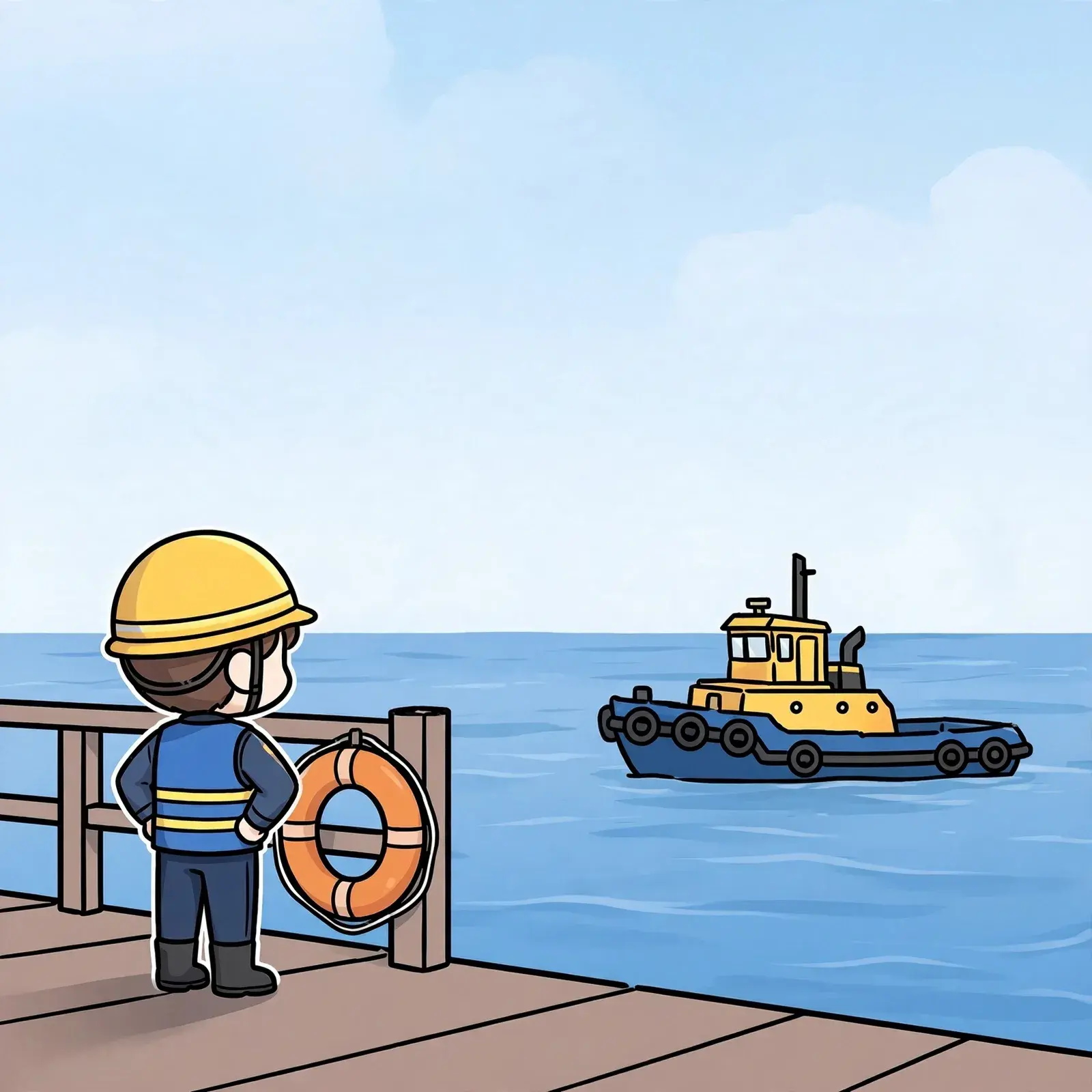
Boarding the vessel was not straightforward. According to the court’s account, the crew had to step on tire fenders—large tires placed around a vessel to soften impacts against a dock or another boat—and climb aboard.
An autopsy found that the sailor’s blood alcohol concentration was 0.22%. The association argued that alcohol and other causes unrelated to his duties should reduce the compensation payable to his family.
The Risk of Getting Back on Board
A boat can shift against a dock as waves move it, making the gap between the vessel and the pier unstable. A person stepping across or climbing over a tire fender may be at risk of losing balance, particularly at night or when the vessel is moving.
The court said the risk of falling could not be ruled out even without alcohol, given the possibility that waves might cause the boat to sway. It also considered the way the sailor had to board when assessing the circumstances of his death.
Why the Court Viewed the Return Trip as Part of the Job
The court concluded that a seafarer’s work is not limited to the hours spent operating a vessel. For workers who live and work aboard ships, preparing for a job, boarding, and returning to the vessel after leaving it can also form part of the working process.
The sailor had left the boat to eat and drink, then came back because he was expected to take part in the nighttime operation. The court noted that he understood he had to return to the vessel and that he had been drinking with the captain, who had authority to direct and supervise his work.
The court found that his conduct had not crossed the boundaries of what could be considered part of his work as a sailor.
This reasoning distinguishes an ordinary private activity from a journey connected to a scheduled assignment. For example, leaving a workplace for a meal and then returning to prepare for a shift may be viewed differently from taking a personal trip with no connection to work.
How Alcohol Factored Into the Compensation Dispute
The sailor’s alcohol level was a significant part of the association’s argument. It maintained that his death resulted from a cause outside his job and that the benefits should therefore be reduced.
The court did not treat the drinking as irrelevant. Instead, it considered the full circumstances: the sailor was due back for an operation, was returning to his assigned vessel, and faced a physical hazard while boarding. It concluded that drinking did not by itself remove the return journey from the scope of his work.
A Work-Related Finding Does Not Mean Every Detail Was Safe
A finding that an accident is work-related does not mean that the court considered the conditions safe or that alcohol presents no danger. It means the court decided that the death occurred in circumstances sufficiently connected to the sailor’s duties for his family to receive the specified compensation.
The case also illustrates why accident claims may turn on several details rather than a single factor. The timing of the shift, the reason for returning, the captain’s role, the route onto the vessel, and the movement of the boat all helped shape the court’s assessment.
The Broader Safety Questions for Maritime Work
Work on and around vessels often involves hazards that are less visible than those in a conventional workplace. Crews may move between a dock and a boat using narrow walkways, ladders, or improvised footholds, while darkness, weather, waves, and the vessel’s movement can make each transfer more dangerous.
The circumstances described in the ruling point to practical safety measures that employers and vessel operators can consider:
- Provide a stable, purpose-built gangway or boarding ladder instead of relying on tire fenders as footholds.
- Ensure adequate lighting around the dock and the vessel’s boarding points.
- Set clear procedures for returning to a boat before night work, including checks that the route is safe.
- Review work schedules and rest arrangements, especially after long stretches of consecutive work.
- Make sure workers can report unsafe boarding conditions without delaying urgent safety action.
These steps do not change the court’s decision in this case, but they address the kind of fall risk that can arise whenever workers must move between land and a moving vessel.
What the Ruling Means for the Family
The court’s partial ruling in favor of the family requires the association to pay more than 133 million won in survivor benefits and funeral costs. The decision recognizes that the sailor’s return to the tugboat was tied to the work he was expected to perform that night.
More broadly, the case highlights how the boundaries of work can be different at sea. A crew member’s duties may include not only operating a vessel but also the steps needed to get aboard and prepare for an assignment—especially when the vessel is both the workplace and the place where the crew must report for duty.