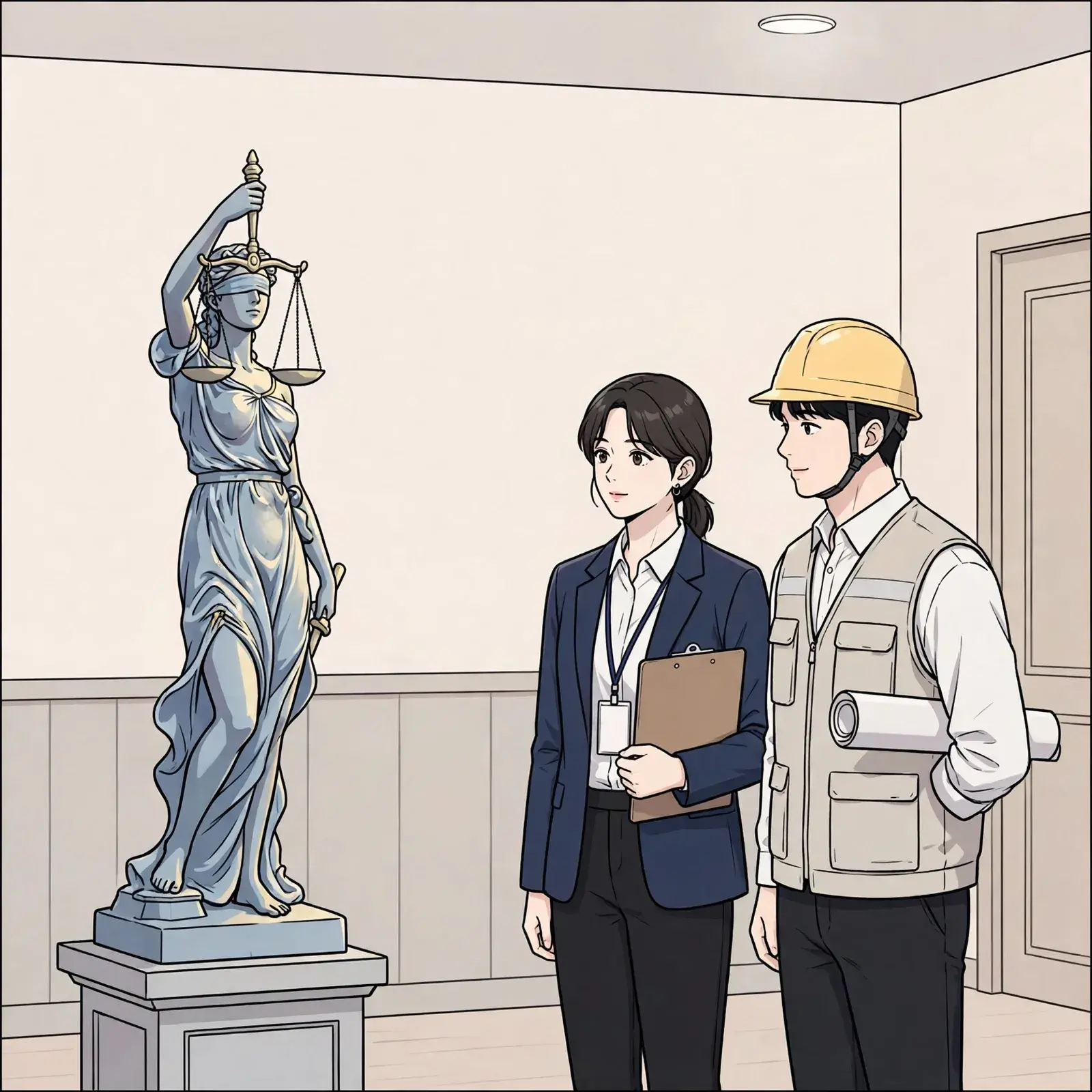
A Sudden Shift in Command
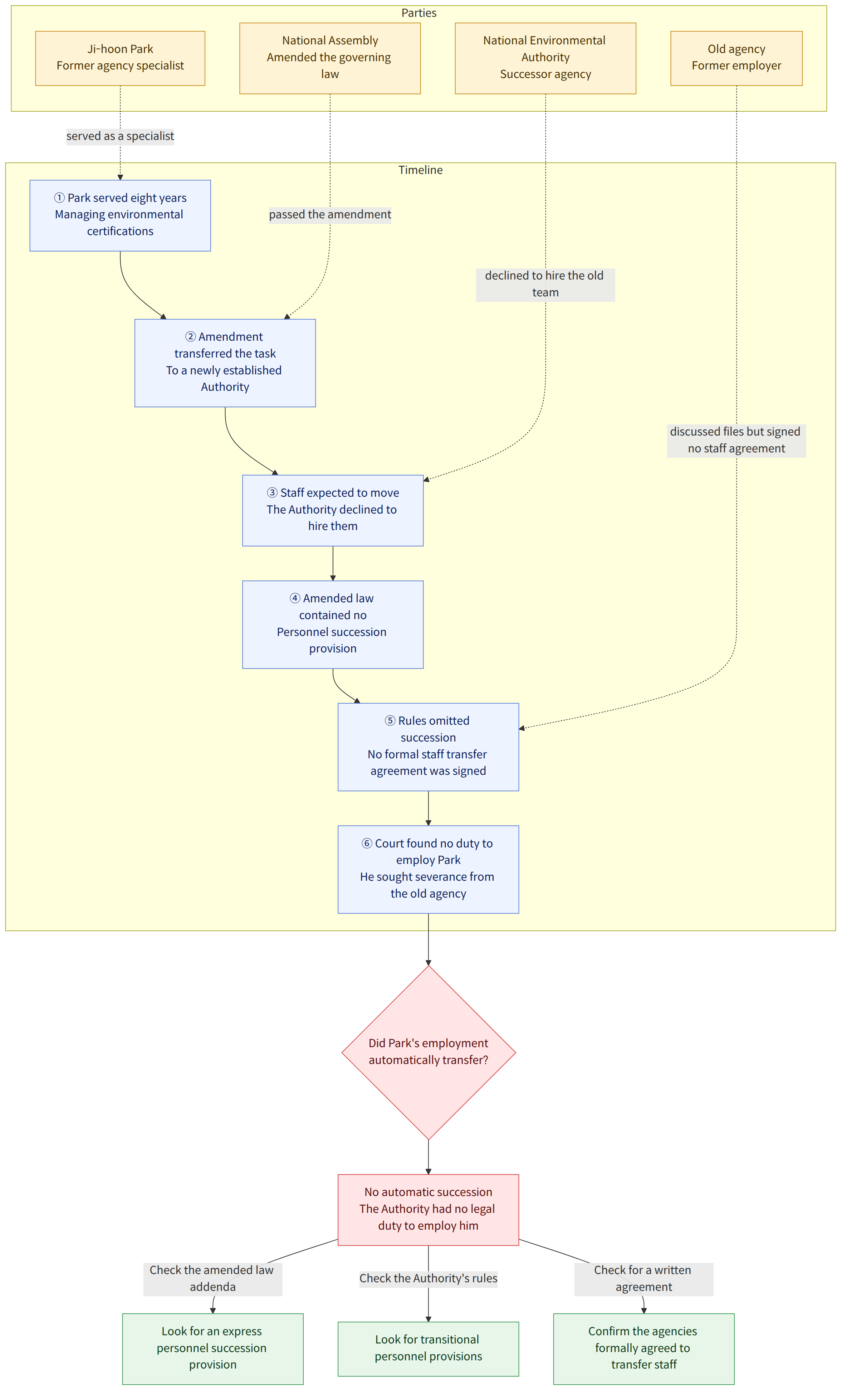
Ji-hoon Park had spent eight years as a dedicated specialist at a state-designated agency responsible for managing national environmental certifications. He knew the regulations inside out and had built a career based on the stability of his role. To Ji-hoon, his position felt permanent because he wasn't just working for a company—he was performing a critical government function delegated by law.
However, the political landscape shifted. To streamline administration, the National Assembly passed an amendment to the governing law. Overnight, the authority to manage these certifications was transferred from Ji-hoon's current agency to a newly established National Environmental Authority.
Ji-hoon and his colleagues assumed that since the work was moving, the workers would move with it. They expected to simply change their email signatures and continue their duties under the new banner. But a month into the transition, the new Authority informed the staff that they were not hiring the old team. Ji-hoon found himself in a legal vacuum: he was no longer employed by the old agency, but the new one refused to acknowledge his employment contract.
The Legal Question
When a government-delegated task is moved from one agency to another due to a change in law, does the employment relationship of the staff automatically transfer (succeed) to the new agency?
What Korean Law Says
In the private sector, when a business is sold or merged (a "business transfer"), employees are generally transferred to the buyer to protect their livelihoods. However, the legal landscape is different when the transfer is mandated by a change in statutory law regarding government duties.
The transfer of a government-delegated task via legislative amendment is not considered a "business transfer" based on a mutual agreement between two private entities.
For employment to be legally transferred in these specific government-agency shifts, one of the following must exist:
- Legislative Addenda: The amended law must contain a "supplementary provision" (addenda) explicitly stating that employees shall be succeeded by the new agency.
- Internal Regulations: The new agency's Articles of Incorporation or Employment Rules must include transitional provisions for the succession of personnel.
- Specific Agreements: A separate, formal written agreement between the old agency and the new agency regarding the transfer of staff.
How Korean Courts Approach This
Korean courts maintain a strict interpretation of these transitions. They reason that because the change is driven by law rather than a commercial contract, the "automatic" succession seen in business mergers does not apply.
If the law is silent on the fate of the workers, the courts generally rule that there is no legal obligation for the new agency to inherit the old employees. Even if the work remains identical, the legal identity of the employer has changed, and without an explicit bridge (a law or a contract), the employment link is broken.
Applying the Law to the Case
In Ji-hoon's case, we must look for the "bridge."
First, we examine the amendment to the environmental law. The law clearly shifted the authority to the new National Environmental Authority, but it contained no supplementary provisions regarding the transfer of personnel.
Second, we review the new Authority's bylaws and employment rules. These documents focus on the new organization's structure but omit any mention of inheriting employees from the previous agency.
Finally, we look for a private agreement. The old agency and the new Authority had discussed the transfer of files and databases, but they never signed a formal agreement to transfer the employment contracts of the staff.
Because none of the three required conditions (Law, Bylaws, or Agreement) were met, there is no legal basis for Ji-hoon's employment to have been "comprehensively succeeded" by the new agency.
Conclusion: What Happened, and What Should You Do?
Tragically, Ji-hoon lost his job. The court ruled that the new agency had no legal obligation to employ him, as the law had not mandated the succession of personnel. Ji-hoon was left to seek severance from his old employer, but he could not force the new agency to give him a desk.
For those working in government-delegated roles, this serves as a critical warning. Stability in a government function does not always equal stability in employment.
Practical Advice:
- Audit the Transition Law: If you hear of a legislative change affecting your agency, immediately check the "Addenda" (부칙) of the amended law for mentions of "employment succession" or "personnel transfer."
- Push for Written Agreements: If you are in a management position during a transition, ensure a formal "Personnel Succession Agreement" is signed between the outgoing and incoming agencies to protect your staff.
- Review Your Contract: Understand whether your contract is tied to the entity (the agency) or the function (the government task). In the eyes of the law, the entity is what matters.